Thursday, 11 July 2013

If you want to get on – get out

If it ever feels like the hands on your watch spin around like a propeller, I’m right with you. Despite the life-enhancing technologies, convenience culture and super-speed connectivity to everything, there’s never enough time. What that can mean is that the ‘desk’ becomes the factory. You clock into your laptop, wherever you are, and start dealing with the conveyor belt of communication that is delivered to you minute by minute.  It’s efficient. You tick off hundreds of requests like a Selfridges Santa, motivated by the satisfaction of keeping the queue down.

But creative people must engage with the world.  And I don’t mean through Tumblr and Twitter and Facebook and LinkedIn and Snapchat.  It sometimes takes a breath of fresh air – a genuine breath of fresh air – before you recognise how much you needed to get out in the breeze.

Yesterday I attended a roundtable debate at the Institute of Directors on flexibility at work. A good subject and something I feel strongly about.  Something that we hold dear at Wordville because it’s our view that the most creative people are those with full lives- those resourceful, engaged, social individuals who take on responsibilities and are connected to their communities. They require flexibility and we’re happy to trade a more open-minded working structure for their commitment to making our agency unmatched for originality and service.

So I was excited to have a discussion about a favourite subject. What I hadn’t given myself time to consider were the people I was going to meet – from entrepreneur Tracey Bovingdon (http://www.tea-monkey.com/Index.aspx) to Microsoft Envisioning Officer, Dave Coplin to Havas UK Group Chairman Kate Robertson – and the effect they would have on me.  It was terrific to be inspired by a group of 11 informed, opinionated, open-minded business folk.

I loved the debate – we didn’t all agree – but the interaction was invigorating. Getting to grips with different businesses, different approaches and different views is always enlightening.  I love the ‘art of business’ – and enjoy engaging with clients, the press, the analyst community and my colleagues and partners.  It’s important to step in amongst a group of strangers now and again. It changes how you feel. You may not feel you have the time to do this¸ but believe me – you don’t have the time not to.


By Lucy George

Monday, 8 July 2013

How not to make an argument


I doubt we were the only PR people that watched askance as Katie Hopkins, already of dubious public image, crucified her reputation live on This Morning last week.

Hopkins, who first achieved notoriety in 2007 after appearing in BBC reality TV series, The Apprentice, was on This Morning’s sofa to discuss children’s’ names. What with the royal baby fast approaching, this is a hot topic and one that Katie has some outrageous and unfounded opinions on.

Over the duration of the segment, Katie denounced a number of children’s names. She said they were implicit of the parents’ lower socio-economic status (and therefore poor attitude to education and discipline) and that she would try and keep her children away from any child bearing them.

The appalling ignorance of Katie’s ramblings and the numerous counter-points to them, have by now been well documented in the media. What I found equally shocking about her appearance was the lack of preparation in her argument and her method of conduction, which riled the audience and This Morning’s usually unflappable presenters.

From the interview’s outset, Katie adopts a mode of speech that assumes everyone else in the discussion is of the same opinion as her. Her lack of preparation is then made laughably apparent when it becomes clear that this is not the case. She has no discernable evidence for her assertions- any statistics identifying a correlation between names and criminality etc. and in consequence is left just sharing opinions that are easily bulldozed.

She shortens Holly Willoughby’s name to ‘Hols’ – a gesture at best over-familiar, at worst patronising and goes on, much to Phillip Schofield’s dismay, to attribute her own opinions to the presenter through the baffling over-use of ‘we’ and ‘our’.

Now I’m prepared to admit that Katie has made a living out of being controversial. Perhaps she feels she does not need to prepare an argument, that it is suffienent to turn up, make assertions in an abrasive manner and watch the media storm unfurl. Even so, I cannot see this as a long-term career strategy. Any flash-in-the pan celebrity can be hired to say something, far fewer to say something intelligent.


My advice to Katie would be… If you want a career in social commentary, found your case on fact not opinion, respond to counter-arguments with more than just reassertions and respect the intelligence of your opponents. 

By Polly Robinson

Friday, 7 June 2013

#GuardianCoffee


Last week saw the establishment of Guardian Coffee, a coffee shop incarnation of the liberal newspaper. Surprisingly for an enterprise associated with a national news publication, the launch was handled with a very softly, softly approach, building gradual momentum on twitter rather than announcement with trumpets and fanfare.

But was this such a bad thing?

The launch strategy actually demonstrated The Guardian’s report with its readership and an awareness of the way news is being both gathered and consumed. News is no longer a one-way service, more a starting point for debate. This theme continues in the coffee shop itself, which projects select (and yes I do mean selected), posts from The Guardian’s twitter feed on its walls.

As could be suspected, the enterprise was met with mixed reviews and a fair few snide remarks. Some wondered whether it represented a much-needed revenue stream in the face of slumping print sales, whilst others pondered how The Guardian’s left-leaning ethos might impact on the menu. How could a straight black or flat-white be made more politically correct?

Traditionalists may snigger at The Guardian branching out into coffee, but to me the move is so blatantly in line with brand values that it does seem a natural rather than radical step. A Guardian oyster bar in One New Change would be laughable, but set in socially mobile Shoreditch, serving locally roasted coffee and sandwiches on ‘un-levesoned’ bread, Guardian Coffee is supremely self-aware.  It merely supplies existing fans with another way to ingest the brand.

By Polly Robinson

Friday, 24 May 2013

How much does cool cost? $1.1 billion if you’re Yahoo


When Yahoo officially announced it had brought micro-blogging site Tumblr on Monday (20th May), it didn’t come as a real shock, as whispers of the impending deal first surfaced last week.

In the lead up to and since the buy-out, the Internet has been flooded with articles, discussions and outrage. Experts say the deal is part of Yahoo’s efforts to revive the struggling company by attracting a younger, trendier audience (Tumblr is strongest in the 18-24 age bracket). Not only does the deal give access to younger users but also a fast-growing number of consumers who are, in general, very engaged online.

Yahoo says it expects to grow Tumblr’s audience by 50% to more than a billion monthly visitors and to grow traffic by approximately 20%. The million – or should I say billion -dollar question is: how does Yahoo plan to monetize Tumblr? Something Tumblr itself has never done. Pre-Melissa Mayer (Yahoo’s CEO), the web pioneer had a miserable reputation of taking on new companies and doing nothing with them (think 2005 - Flickr and Delicious). Mayer has been proactive in addressing users concerns and preempting media backlash by releasing a statement on the same day via her newly acquired Tumblr account, promising not to ‘screw it up’ and even poking fun at the buy-out.


However this hasn’t stopped 72,000 people exporting their Tumblr blogs to rival blogging site Wordpress on Sunday evening.

I think its safe to say we won’t be witnessing the birth of ‘Yahooblr’ but with a price tag of $1.1 billion (£723m), there’s no doubt there are some anxious shareholders waiting for answers on how to monetize the blogging site, and quickly. I expect it will take a similar route to YouTube, after Google bought them in 2006, with the introduction of advertising and other monetizing services onto the site. It’s been a commercial success for Google because content marketing is more accepted by young millennial users now - the audience that Yahoo is courting.

Yahoo would be stupid to storm in and make radical changes, this would only serve to alienate users in their masses, something they have promised not to do. Founder David Karp will remain at Tumblr as CEO. Karp has been quick to defend the buy-out by pointing out the benefits to users of joining up with the ‘original internet company’. According to Karp - Tumblr will only get faster and better.

It’ll be interesting to see Tumblr evolve. To me, there are two big, immediate challenges Mayer and Karp are going to be faced with: How to remain cool when you are owned by a less cool corporate entity and how to monetize Tumblr without alienating users?

Here are some of my favorite Tumblr responses: 
By Pema Seely

Monday, 13 May 2013

The meme takeover


The Harlem Shake and Gangnam Style spread like wildfire on our screens earlier this year. But are brands that are cashing in on these latest crazes being lazy or cleverly responding to a cultural phenomenon?

Everyone has jumped on the bandwagon – Topshop’s version of the Harlem Shake involved newest supermodel on the block, Cara Delevingne and reached over 1.4 million views on YouTube. Electric cigarettes brand, Elites, featured a baby taking his first steps before breaking into Gangnam Style and has been viewed 1.7 million times. 

Not everyone has got it right. Pepsi’s Harlem Shake edition was met with criticism for killing off the trend by making it too corporate and overtly promotional, whilst Wonderful Pistachio’s take on the dance craze, aired at the Super Bowl, was only the 20th most shared advert of the event.

Memes are nothing new, but the increase of their online exposure is. Within three days, the amount of Harlem Shake videos online increased from 12,000 to 40,000 and had accumulated 175 million views. 

Memes also have a very short life span at when they are most effective. Brands that have come out on top have been quick to react to the latest trend and have captured the collective imagination as a result. Although Ask.com pre-empted criticism of their two-week late reincarnation with the pre-fix message, “Yeah, yeah, we know. We just couldn’t pass up the biggest meme of the week”, the 12,000 views generated hardly constituted viral success. 

A great advert doesn’t have to stem from a craze though. Take the Evian adverts for example. The inaugural edition of the award-winning ‘Roller Babies’ advert back in 2009 has a record 67 million views online – the most ever for an ad, holding a Guinness World Record. Now, there’s no such thing as an original idea, but what Evian did was no doubt clever and creative. Even the use of babies wasn’t new (Etrade babies golfed in adverts) but Evian’s was amusing, entertaining and puzzling – some could say some of the babies were slightly creepy.  

The water brand is hoping to beat its own record with this year’s advert ‘Baby & Me’. Launched a couple of weeks ago, the advert follows the same, fun loving approach as the 2009 ad, channelling the brand’s ‘live young’ strapline. A group of adults dance around in front of a reflective shop window and discover their reflections are, in fact, baby versions of themselves. The advert has received over 45 million views to date. It seems that, for the public, a good advert needs to be memorable, not meme full.


By Stephanie Rock 


Tuesday, 7 May 2013

Is PR in need of a professional remedy?


This week Ruth Wyatt asked PR Week readers whether Public Relations had been neglecting its own reputation. I would love to say of course not, that PRs are as loved as organic farmers and as respected as foreign aid workers, but that would be a lie (and therefore perpetuate the problem).

On announcing my profession, I’m often met with one of three responses:
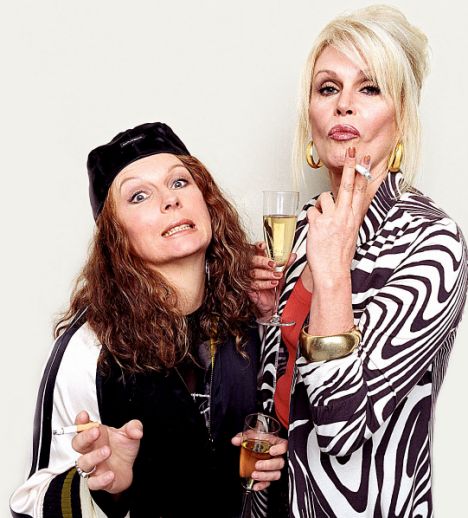
  • The Edina- Issued by those overly familiar with Ab Fab, this involves repeating what you’ve just said back to you in a loud, plumy accent, often with the addition of darling e.g  “Oh PRRRRR darling!”
  • The back-away- Often the response of business owners, terrified that they’ll somehow succumb to your services. Yes it’s likely that our mental cogs are turning, but we don’t carry contracts in our handbags. Often.
  • Incomprehension- Possibly the most irritating of them all, this leads on to a lengthy explanation of what we do which all too often concludes with the response “Ohhh, like advertising?” No. Not like advertising.

In her article, Wyatt goes on to offer a number of reasons why this may be the case.

First- Max Clifford. Yes he’s made the reputations of many a celebrity but the man has almost single-handedly slayed that of his profession. Thanks to his shameless self-promotion and desire to be known as media-puppeteer, we are now all suspected of vanity and Machiavellian tendencies. 

Wyatt also sites reoccurring fraud allegations as damaging for the PR profession. The most recent of which occurred in the last fortnight, with the sentencing of former Activision senior PR manager Kathryn Kirton and ex-Frank PR associate director Jamie Kaye.

Now we can kick and scream, protest that these are isolated incidents and therefore not indicative of the wider situation, but we are facing a crisis. It is now every agency’s responsibility to improve the reputation of our industry. So Ruth, in answer to your concluding question, Here are a few things that can be done:

  • Industry transparency - We all know the importance of transparency and will emphasise this to our clients, yet we also can be guilty of opaque behaviour (be it intentional or not). Take industry jargon. On a daily basis we use terms that resemble Martian to the uninitiated. We need to speak English rather than PR or our clients will leave feeling blinded by science.
  • Figureheads - Ask anyone for a famous PR and the only name on anyone’s lips is the aforementioned, virulent Max Clifford. The PR industry is changing for the better (an end to unpaid internships etc.), and there are plenty of great PR professionals. We need to get good spokespeople out there and singing our praises.
  • Measurement– Any PR will tell you that the AVE (Advertising Value Equivalency) system is outdated but clients, quite reasonably, need some indication of their ROI. With an industry-wide standard a far-off ideal, it is essential PRs and their clients are clear on how PR services will be measured. We need to listen to our clients, find out their criteria for success and advise on their expectations. It is only through agreeing on targets that we can experience the satisfaction of them being met.

By Polly Robinson

Monday, 15 April 2013

Pema takes BBOXX to Nepal- Part 2


Despite my fear that I’d somehow not be able to live without my phone – I’ve survived to tell the tale and it’s thanks to the BBOXX.

 When I ask people what they miss when they’re on holiday, most people reply with the usual home comforts; tea, their bed, food. For me, in Nepal, it was electricity and wifi.

Now don’t get me wrong- Nepal has come on leaps and bounds since my last visit and seems light-years ahead of the country I remember from my early childhood. But it still has its problems; one of them being stable, reliable electricity.

As soon as I landed there were some issues. My phone had died about six hours into the journey, which meant there was no way of contacting my mum, who was picking me up. I don’t know our home phone number in Nepal, and even if I did, I had no money whatsoever on me to call it. Not the ideal start to the holiday. Luckily for me, she’s even more nervous about me travelling than I am so had been waiting at the airport for several hours. First panic over.

As we drive to the house from the airport, I can see that one half of the road is blacked out – power cuts. My mum tells me that parts of the city black out at different times, sometimes it’s houses a few metres apart that do or don’t have electricity for a night.

The first morning- 6am- knock, knock, knock. It’s my mum, she’s eager to see the BBOXX, or should I say charge her phone. Bleary-eyed and rather reluctantly, I get up so we can set it up.

The first thing that became apparent was that there are lots of bits and bobs (this is the correct technical term). Now this is when alarms bells start going off, as my mother and I are the least techy people I know. However, it was actually surprisingly easy to set up and use. So if you’re as incapable as me when it comes to technology, then don’t fear- this is easy peasy…once you read the instructions.

So now we have our phones charged, the next issue is wifi. There is none at my grandparents' house so there’s not much I can do with my phone expect turn it on, play angry birds and hope someone texts me…all I can say is it was a long two weeks.
 
By Pema Seely